
How to make your nonstick skillet last longer: simple care tips that work

Nonstick skillets earn a permanent place in many kitchens for the way they handle eggs, fish fillets, crepes, and other foods that love to cling. But unlike heavy stainless steel or cast iron, nonstick pans are more fragile and will wear out quickly if they are handled roughly.
With a few straightforward habits in how you cook, clean, and store them, you can slow down that wear and get much more life from the nonstick coating before it loses its slick surface.
Choose the right utensils
The fastest way to ruin a nonstick surface is by scraping it with metal. Even fine scratches gradually weaken the coating until it starts to peel, flake, or simply stops releasing food easily.
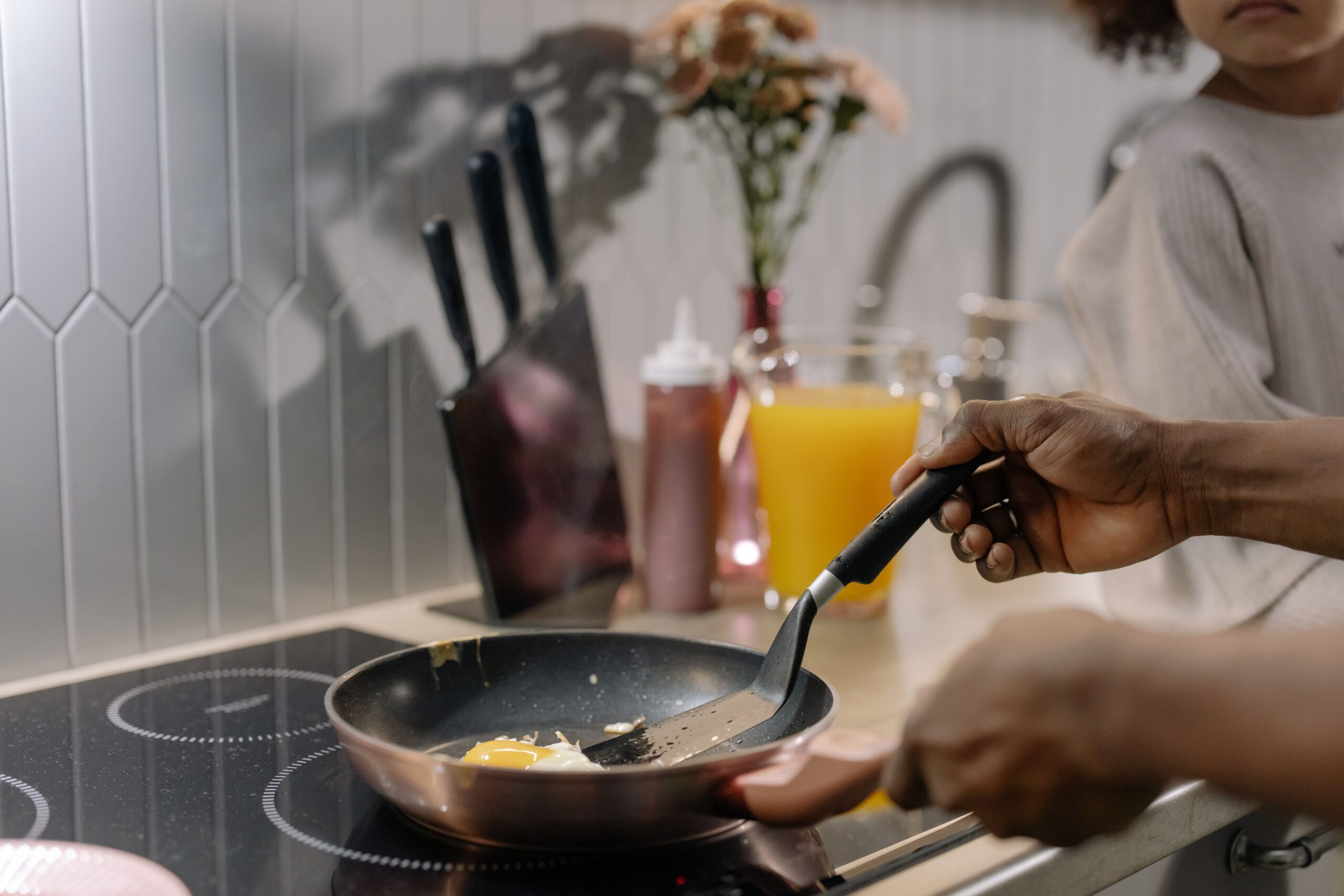
Whenever you cook with a nonstick skillet, reach for soft, non-abrasive tools:
- Silicone spatulas and spoons – flexible and gentle on the coating
- Wooden utensils – sturdy but kind to the surface
- Heat-safe plastic tools – smooth edges that won’t gouge the pan
Avoid metal spatulas, forks, whisks, and knives on nonstick, and skip aggressive chopping, smashing, or scraping right in the pan. Treat the surface as something that can be scratched easily, because it can.
Avoid heating an empty pan
Nonstick skillets heat up quickly, which is convenient for fast breakfasts but risky if you forget one on a hot burner. Traditional PTFE-based coatings, often known by brand names like Teflon, can start breaking down when temperatures climb above around 500°F (260°C). An empty pan can reach that range far more quickly than you might expect.
To keep temperatures in check, add a little oil or butter before you turn on the heat. The fat works as a simple visual cue: once the butter melts or the oil begins to shimmer, the pan is ready. This helps you avoid accidentally overheating the coating while the skillet sits empty on high heat or under a broiler.
Use moderate heat on the stovetop and in the oven
Nonstick pans are best for gentle to moderate heat, not for intense searing or charring. If you regularly cook over high heat, the coating will degrade more quickly even if you never scratch it.
Keep these guidelines in mind:
- Stick to low to medium-high heat for everyday cooking with nonstick.
- Save very high heat for stainless steel, carbon steel, or cast iron skillets, which can tolerate it better.
- Check oven limits printed by the manufacturer before putting a nonstick pan in the oven. Many models are only rated safe up to a specific temperature range, often roughly between 350°F and 480°F (about 175°C to 250°C).
Exceeding those limits can warp the pan or damage the coating, shortening the useful life of the skillet.
Limit long cooking with acidic foods
Nonstick skillets shine at quick tasks—scrambled eggs, fish fillets, pancakes, and tender vegetables. They are less suited to long, slow cooking of acidic ingredients.
Tomato-based sauces, wine reductions, and other highly acidic dishes that simmer for a long time can gradually wear away delicate nonstick coatings. For those recipes, it is better to use stainless steel, enameled cast iron, or another more durable option and reserve your nonstick pan for shorter, less acidic cooking jobs.
Hand-wash gently and avoid thermal shock
Even if the packaging says your nonstick skillet is dishwasher-safe, hand-washing is usually kinder to the coating. Dishwasher detergents are strong, and the combination of hot water, harsh cleaners, and powerful jets can take a toll over time.
To clean a nonstick pan:
- Let the skillet cool down fully after cooking.
- Wash it with warm, soapy water and a soft sponge or cloth.
- Avoid scouring pads or abrasive cleaners that can scratch the surface.
It is especially important not to run a very hot pan under cold water. That sudden temperature change can cause thermal shock, which may warp the pan and shorten its lifespan.
Store nonstick pans so they don’t scratch
The way you store your cookware also matters. Stacking pans directly on top of one another can mark or scratch the coating every time they shift.
If you need to nest pans to save space, place something soft between them:
- Paper towels
- Dish towels
- Felt pan protectors
That thin layer creates a buffer, so metal rims and bottoms do not rub directly against the nonstick surface. It may feel like an extra step, but it is far easier than replacing a skillet because the coating is full of small scratches.
Use nonstick where it excels
Even with very careful treatment, nonstick coatings eventually wear down—that is simply part of how these pans age. They will not last as long as cast iron, carbon steel, or stainless steel, which can be used for decades with proper care.
The goal is to slow that aging and get more good cooking out of each skillet. Use your nonstick pan for the gentle, sticky-prone foods it handles best, keep the heat modest, choose soft utensils, wash by hand, and store it thoughtfully. With those simple habits, your nonstick skillet can stay slick and reliable for significantly longer before it needs to be replaced.



0 comments