
The best placemats for stylish, spill-safe dinner parties
When you host guests often, your dining table takes a beating. Glasses sweat, sauces splatter, and the occasional overfilled plate or cocktail can leave marks you’ll regret. Placemats are the first line of defense—and, if chosen well, they also pull the whole table together.
To find out which placemats actually protect a table while still looking good, Serious Eats senior editor and avid dinner-party host Grace Kelly tested 11 different options. She evaluated them over several weeks by setting full place settings, deliberately staining them with tomato sauce, and cleaning them according to the manufacturers’ instructions.
How the placemats were tested
The testing focused on three main areas: how the placemats fit on a real table, how they behaved during actual meals, and how well they resisted and released stains.
- Table-setting test: Four placemats were laid out on an oval dining table, first over a white linen tablecloth and then directly on the tabletop, to judge spacing and overall appearance.
- Eating test: Each mat held a full setting—a dinner plate, cutlery, and a drink—during a meal. Kelly watched for slipping, crowding, and whether the dimensions felt practical.
- Stain and clean test: Every placemat was placed on a tablecloth-covered table and dotted with jarred tomato sauce. After blotting, she checked if the stain seeped through to the cloth beneath, then washed or spot-cleaned the mat per the care instructions, and ironed any that were meant to be pressed.
From those 11, six models stood out for a mix of protection, looks, and durability.
What really matters in a placemat
Thickness and material are key for protection
Across all the tests, thickness and fiber type made the biggest difference in how much protection a placemat offered. Thinner cotton and linen models were the most likely to let tomato sauce pass through and mark the tablecloth underneath. Very slim linen mats around 0.8 millimeters thick barely slowed the stain at all.
By contrast, denser and less absorbent constructions performed far better. A wool mat made from matted Merino fibers and a thick abacá (a banana-family plant fiber) woven placemat from Crate & Barrel prevented sauce from soaking through. More substantial linens—around 1.2 millimeters—and robust cottons reduced, though didn’t always eliminate, seeping.
Measured thicknesses during testing ranged from under a millimeter for some bamboo and linen styles to more than 7 millimeters for the chunky abacá weave. Unsurprisingly, the thickest options created the strongest barrier.
Size should suit your table and guest list
There’s no single ideal placemat size; it depends on your table and how many people you usually seat. Large, statement-making mats can look luxurious when you’re only setting places for two, but feel cramped once you try to fit four or more around a smaller table. Very big designs—like scalloped mats measuring 21 by 15 inches—made Kelly’s oval table look overcrowded when used in a group.
By comparison, mid-sized mats in the range of about 18.5 by 14 inches offered generous coverage for a plate, cutlery, and glass without swallowing the whole tabletop. Round mats can also be easier to fit in tighter configurations, especially on round tables.
Construction quality is more obvious than you’d think
Price didn’t always match build quality. Some of the most expensive linens tested arrived with tapered sides, uneven rectangles, or borders pieced together from multiple short strips of fabric. In one case, the two fabric layers of a mat weren’t even secured to one another, making it difficult to iron them flat and leaving wrinkles and puckers at the seams.
Better-made pieces, such as the top-ranking linen option, felt denser in the hand, had straight, even borders, and used continuous bands of fabric for trim. They also lay flat more readily after washing and ironing, with fewer ripples.
“Reversible” claims can be misleading
Several manufacturers sell their placemats as reversible, but in testing, these usually had a branded fabric tag stitched prominently on one side. Technically you can flip them—but you’ll be staring at a label. That makes it less realistic to turn the mat over and keep using it once a stain becomes permanent.
The only truly reversible model tested was a faux leather round mat that looked the same on both sides, though its darker underside was visible at the edge, still making it feel like a back side.
Caring for different materials
Cleaning instructions varied widely. Many cotton and linen mats could go in the washing machine, but often with caveats: cold water, gentle detergent, careful drying, and almost always some degree of ironing afterward to restore a crisp look. Softer natural fibers in particular are prone to wrinkling and shrinking if handled roughly.
Some sturdier mats, such as those made from Merino wool or stiff woven fibers, required spot cleaning only. In practice, tomato sauce wiped off the wool model easily even after 20 minutes of sitting. Synthetic or bamboo-based placemats typically called for wiping with soapy water and air-drying, with warnings against high heat, harsh solvents, or machine washing.
The top placemat picks
The best cotton placemats: Hawkins NY Essential Striped Placemat
Among the cotton options, the Hawkins NY Essential Striped Placemat emerged as a standout for everyday use. Its rectangular mats measure about 18.75 by 14 inches—a comfortable middle size that accommodates a full place setting without crowding the table.
At roughly 1.6 millimeters thick, these cotton mats felt pleasantly weighty and substantial. During testing, their density prevented tomato sauce from traveling through to the white tablecloth underneath, and the stitching around the edges was neat and uniform. The simple striped pattern, available in several colorways, pairs easily with both casual and more polished table settings.
Downside: After machine washing and ironing, the surface of the placemats developed a slightly rippled texture and didn’t look quite as sharp as they did straight out of the package. They were still functional and attractive, but less perfectly crisp.
Another strong cotton choice: Dusen Dusen Herb Placemats
For hosts who like bold, playful patterns, the Dusen Dusen Herb Placemats offered a high-quality alternative. These rectangular cotton mats are around 13.25 by 18.5 inches—just slightly smaller than the Hawkins set—and felt notably thick at about 2 millimeters.
They handled daily use well. A dinner plate, utensils, and a glass all fit comfortably, and their heft helped keep wrinkles at bay. In cleaning tests, tomato sauce did soak through the fabric, but it did not leave a mark on the tablecloth underneath. The vivid colors and pattern make them more of a style statement than a neutral basic, which some people will love and others may find too loud.
Note: At the time of testing, this design was out of stock, so availability may vary.
The best linen placemats: Rough Linen Orkney Placemats
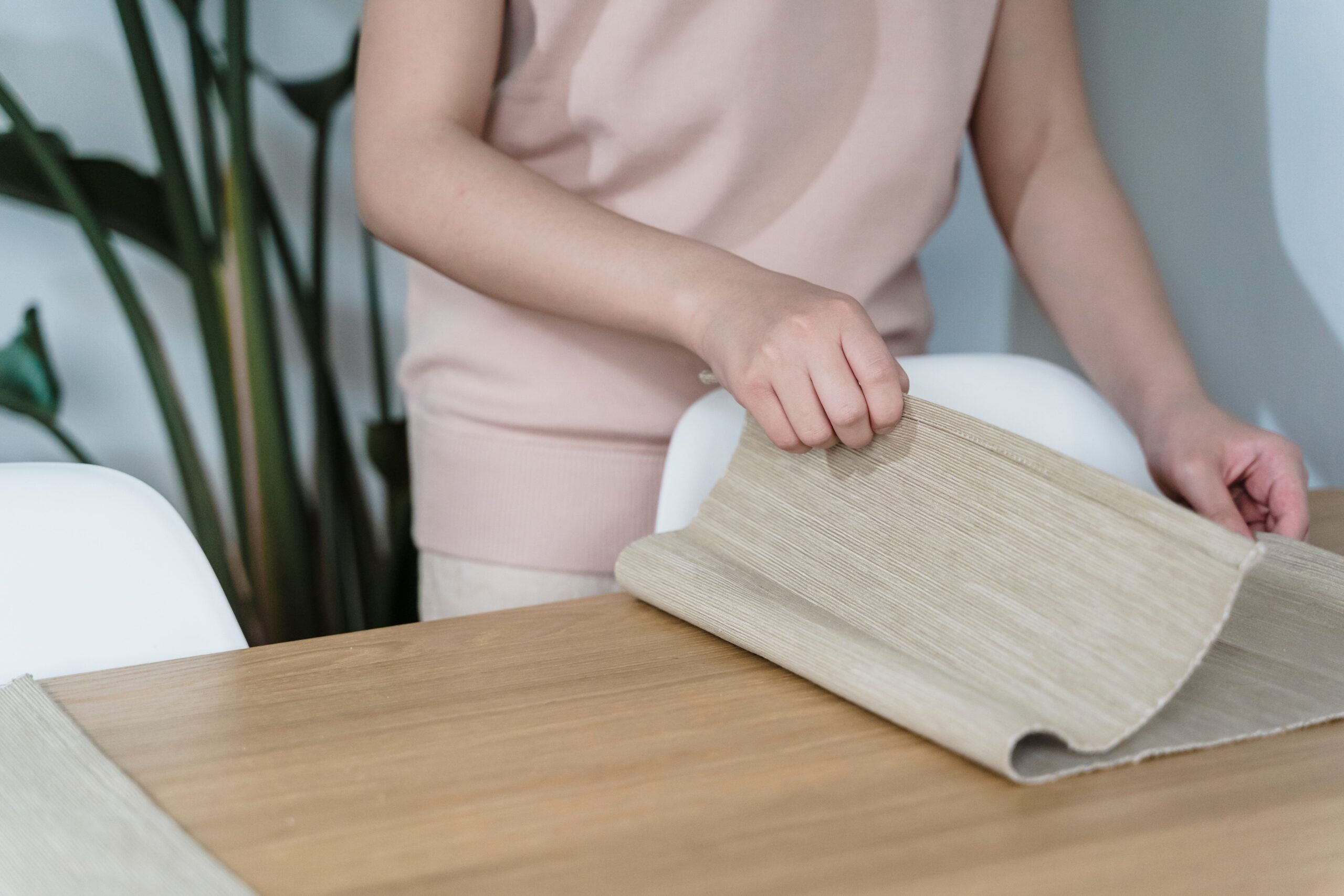
For fans of classic linen, the Rough Linen Orkney Placemat performed the most consistently. It delivered what many people expect from a good linen mat: clear weight in the hand, noticeable thickness, and clean, wide hems without frayed edges.
Sized at roughly 14.75 by 17.75 inches and about 1.2 millimeters thick, it offered a compact but still generous landing zone for each place setting. The tomato sauce stain lifted easily with washing, and after a quick iron, the placemat looked almost fresh from the package.
Trade-offs: During testing, tomato sauce did faintly mark the tablecloth underneath, leaving a small, pale smudge—so it’s not as impermeable as wool or heavy plant fibers. At the time, only one color was offered, and like most linen, it needs gentler laundering and careful drying to avoid excessive wrinkling or shrinkage.
The best stain-resistant placemats: Graf Lantz Merino Wool Oval Placemat
If stain resistance and table protection are top priorities, the Graf Lantz Merino Wool Oval Placemat stood out. Constructed from dense Merino wool felt and about 3.1 millimeters thick, it was one of the best performers in the tomato sauce tests: the stain stayed on the surface, left no trace on the tablecloth below, and wiped away easily when spot-cleaned—even after sitting for around 20 minutes.
Its oval shape, approximately 14 by 19 inches, made it easy to center a large dinner plate while still leaving room for flatware on either side. The overall feel is sturdy and substantial, and the line includes multiple shapes and colors.
Limitation: The brand name is stamped into the center of one side, so using the reverse isn’t really an option if you want a tag-free look.
The best woven placemats: Crate & Barrel Bali Round Woven Placemat
For a rustic, textured look that also offers serious protection, the Crate & Barrel Bali Round Woven Placemat was the strongest woven contender. Made from abacá, a tough fiber from a plant related to banana trees, it has a substantial 7.6-millimeter thickness and a 15-inch diameter.
On the table, these round mats felt almost like trivets—they’re that dense. In testing, the weave blocked tomato sauce from reaching the tablecloth, and the size was well-suited to generous plates or wide bowls. At around $10 each at the time of testing, they were also among the more affordable options in the group.
Drawback: Because the material is heavily textured and full of nooks and crannies, cleaning off sticky sauces took more effort than with smoother fabrics. A soft brush and patience are helpful for getting residue out of the weave.
The best outdoor placemats: Chilewich Bamboo Placemats
Chilewich’s bamboo-style placemats are already popular for good reason, and testing confirmed their strengths. Made from slick, stain-resistant bamboo-look fibers, they didn’t wrinkle, felt very durable, and came in a wide range of colors and sizes. Their larger rectangular format—about 19 by 13.75 inches—makes them ideal for messy eaters who scatter crumbs and drips beyond the edges of their plates.
These mats shone in scenarios where the table itself didn’t need protection from liquids—such as metal or glass outdoor tables. The material doesn’t readily absorb stains, and a wipe with soapy water typically refreshes them quickly.
Important caveat: The woven structure has small gaps, so liquids can seep through. In the tomato sauce test, the spill passed straight to the tablecloth beneath. That’s not a big issue for bare outdoor tables, but it’s something to keep in mind if you’re using them over a cloth or on a treasured wooden surface. They also have more detailed care restrictions, including avoiding machine washing, dishwashers, high heat, and certain solvents.
Placemats that didn’t make the cut
A few candidates fell short in one or more areas during testing:
- Quince European Linen Placemat: Thin fabric, uneven border seams, and a tendency to wrinkle and bunch even after ironing. Tomato sauce readily soaked through to the tablecloth.
- Morris & Co. x Williams Sonoma Blackthorn Placemat: High price but underwhelming construction, including uneven sides, overlapped border segments, and fabric panels that didn’t lie smoothly together.
- Solino Home Linen Cloth Placemats (set of four): Attractive and neatly edged but too thin to stop stains from seeping through, smaller in size, and prone to shifting.
- Rizzo Round Reversible Brown Faux Leather Placemat: Functionally solid—no staining or wrinkling—but the material looked obviously synthetic, lacking the appearance of real leather.
- BedThreads Scalloped Placemats: Visually appealing online, but in person the linen felt very thin and semi-transparent in spots, with messy-looking edges. Tomato sauce penetrated to the tablecloth.
FAQs about choosing placemats
What are the best placemats for a wood table?
For wood, thicker placemats are preferable because they’re less likely to let liquids seep through. Dense wool felt and robust plant fibers (like abacá) offer strong protection. Very thin cotton or linen and woven mats with obvious gaps are more likely to allow moisture through to the surface below.
Is there a single best material for placemats?
Not really—it depends on your priorities. Softer fibers like linen and cotton feel and look classic but can stain more easily and don’t always block liquid completely. Thicker materials, such as wool felt or tightly woven natural fibers, are better at resisting stains and protecting what’s underneath. Synthetic bamboo-style weaves and similar materials are often the easiest to wipe clean but may have small gaps in the pattern.
What works best on a round table?
Round placemats usually fit more naturally on a round table, especially when seating several people. However, reasonably sized rectangular mats can still look good on a circular table, particularly if you’re only setting four places and leave enough space between settings.
Why these recommendations are trustworthy
These picks are based on hands-on testing by Grace Kelly, a senior editor at Serious Eats who regularly hosts dinner parties. She used each placemat repeatedly, deliberately stained them with tomato sauce, followed the stated cleaning instructions, and noted how they looked and performed over time. The recommendations here reflect how the mats behaved in real-world conditions, not just how they appeared out of the package.



0 comments