
8 top Damascus steel kitchen knives for home cooks

Damascus steel knives stand out in any kitchen drawer. Their flowing, wave-like patterns are instantly recognizable, but it is not just about looks: these blades are forged for performance, durability, and precision work on the cutting board.
After extensive testing of different styles and brands, a few Damascus knives proved especially impressive. From all-purpose chef’s knives to vegetable-focused nakiri blades and specialist slicers, the picks below cover the core needs of most home cooks.
What makes a knife “Damascus”?
Modern kitchen knives described as “Damascus” are not the same as the legendary historical Damascus steel, but they borrow its visual appeal and layered structure. Today’s Damascus-style blades are typically created by stacking different steels together, then forge-welding, folding, and hammering them into a single billet. When the blade is ground and etched, the layers reveal a swirling or rippled pattern.
As knife authors Helen Symonds and Tom Saunders explain, this is essentially pattern-welded steel: the more layers and folds involved, the more intricate the final design. That pattern is also a showcase of the maker’s control and technique, which partly explains the higher prices compared with plain, stamped knives.
Why Damascus knives cost more
Damascus knives usually sit in the premium price range. Several factors contribute to this:
- Forged construction: Unlike thin stamped blades, Damascus knives are individually forged from layered steel.
- Material quality: Many use hard, high-carbon steel at the core, clad with stainless Damascus for protection and looks.
- Craftsmanship and finishing: The grinding, polishing, and etching needed to reveal the pattern add time and labor.
For serious home cooks, the payoff is a knife that can take a fine edge, stays sharp longer with proper care, and adds a distinctive look to the kitchen.
Main types of Damascus kitchen knives
Damascus steel can be used for almost any knife shape. These are the most common types you’ll see for home cooking:
- Chef’s knives: The primary all-rounder for chopping, dicing, mincing, and slicing. An 8-inch blade suits most users.
- Paring knives: Small, agile blades for peeling, trimming, and detail work such as hulling strawberries or deveining shrimp.
- Santoku knives: Shorter than a Western chef’s knife, with a flatter profile and a rounded “sheep’s foot” tip; good for push-cutting vegetables and proteins.
- Nakiri knives: Rectangular vegetable knives designed for straight up-and-down cuts through produce.
- Petty knives: Also called utility knives; typically around 6 inches long, ideal when a paring knife feels too small and a chef’s knife too large.
- Slicing knives: Long, narrow blades used for carving roasts or making thin, clean slices of foods like smoked salmon.
- Boning and fillet knives: Slim, curved, and often semi-flexible blades built for working around bones and removing skin from meat and fish.
Our favorite Damascus kitchen knives
Best Damascus chef’s knife: Zwilling Kanren 8-inch chef’s knife
The Zwilling Kanren 8-inch chef’s knife combines a hard, high-carbon core with stainless Damascus cladding. The result is a blade that takes a keen edge like carbon steel but is easier to maintain day to day.
Testers especially liked the gently rounded belly of the blade, which makes rock-chopping herbs, nuts, and garlic feel natural. As a primary knife for most prep tasks, it hits the sweet spot between sharpness, durability, and comfort.
Best Damascus paring knife: Cangshan Kita paring knife
The Cangshan Kita paring knife, with its relatively long 4-inch handle, initially raised doubts about whether it could handle precise work. In use, it handled fine tasks like supreming citrus, peeling shallots, and hulling berries with ease.
The longer handle can be an advantage for cooks with larger hands or those who prefer a more substantial grip on a small blade, while the Damascus finish adds a decorative touch.
Best Damascus santoku knife: Made In Japanese Damascus steel santoku
Made In’s Japanese Damascus steel santoku offers a balanced profile that works well for both push-cutting and gentle rocking motions. During testing, it sliced through vegetables and meat cleanly, handling skin, sinew, and small bones without hesitation.
The pronounced, wavy pattern on the blade makes it a standout piece visually, while its sharp edge and comfortable handle make it a reliable everyday knife for home cooks who like a slightly shorter, more compact main knife.
Best Damascus nakiri knife: Yoshihiro hammered Damascus nakiri vegetable knife
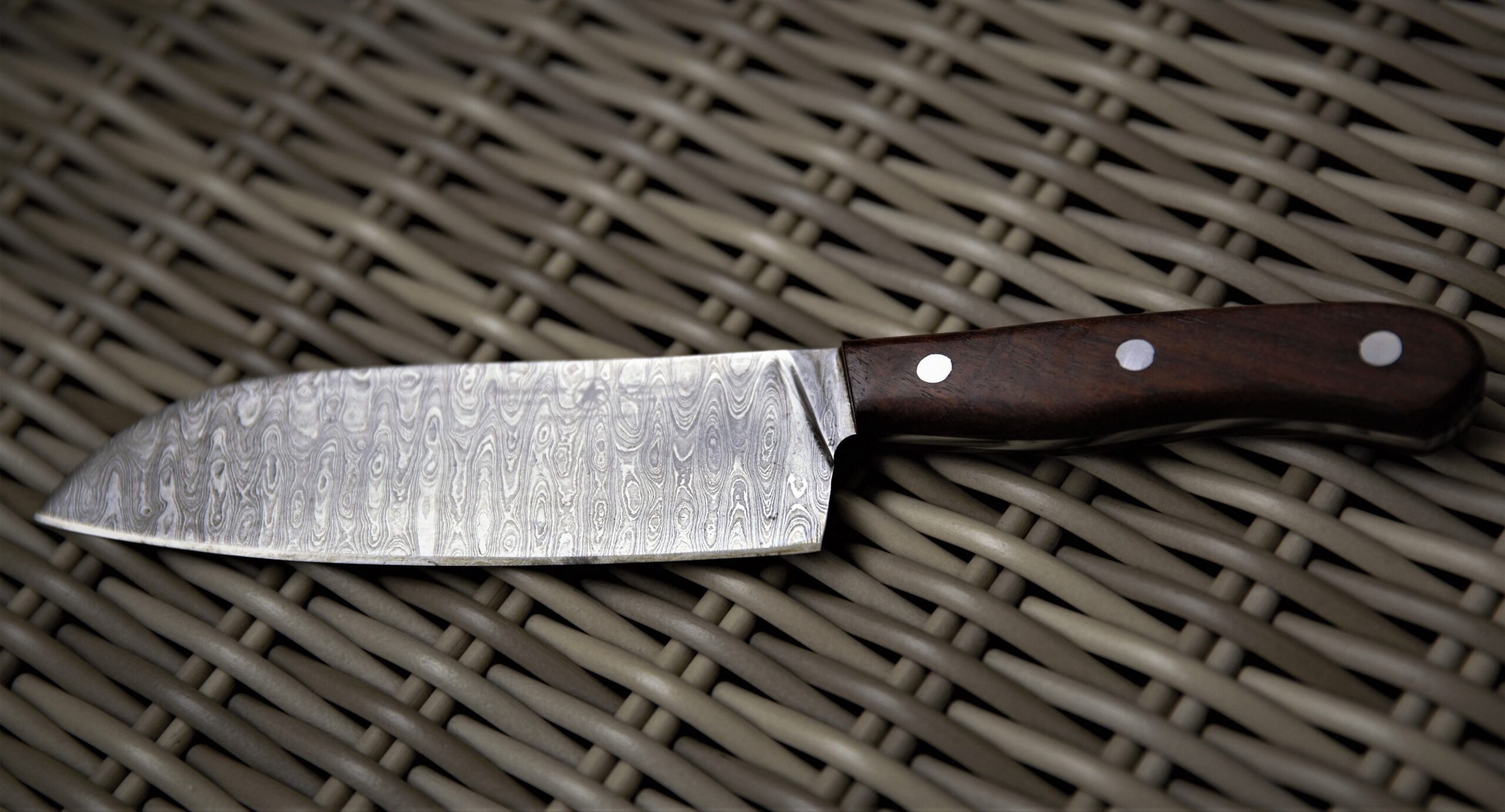
The Yoshihiro hammered Damascus stainless steel nakiri is purpose-built for vegetables. Its straight edge and rectangular shape excel at chopping onions, mincing herbs, and slicing through firm produce like squash and sweet potatoes.
Testers found the edge extremely sharp—precise enough for delicate alliums, yet sturdy enough for harder vegetables. The hammered finish above the Damascus layers also helps reduce sticking as you cut.
Best Damascus knife set: Shun Classic 9-piece Chef’s Choice knife block set
Knife sets often include more pieces than most home cooks truly need, but the Shun Classic 9-piece Chef’s Choice set is notably well-composed. The knives feature straight, easy-to-control handles and very sharp edges straight out of the box.
The set typically includes:
- Chef’s knife
- Paring knife
- Santoku knife
- Boning knife
- Slicing knife
- Bread knife
- Kitchen shears
- Honing steel
For those looking to invest in a cohesive line of knives with a consistent feel and Damascus styling, this set is a strong option.
Best Damascus petty knife: Shun Classic 6-inch chef’s (petty) knife
The Shun Classic 6-inch knife functions as an excellent petty or utility knife. Sharp and precise, it is ideal for smaller jobs where an 8-inch chef’s knife feels unwieldy—such as breaking down a chicken, trimming silver skin, or slicing fruit.
Its light-colored handle stands out visually, and the blade’s subtle, fish-scale-like pattern gives it a refined appearance while still being a practical daily tool.
Best Damascus fish fillet knife: Shun Cutlery Classic Gokujo 6-inch boning and fillet knife
For cooks who regularly work with whole fish, the Shun Classic Gokujo 6-inch boning and fillet knife is a specialized tool worth considering. The curved blade follows the natural contours of the fish, helping you separate flesh from bone efficiently.
In testing, it handled bones, fins, and scales cleanly, offering the flexibility and control needed for neat fillets.
Best Damascus slicing knife: Miyabi Mizu slicing knife
The Miyabi Mizu slicing knife sits at the higher end of the price spectrum, but its performance backs it up. Its long, razor-sharp blade can carve roasts with minimal sawing and produce very thin slices of delicate foods like smoked salmon.
The textured surface of the blade is designed to help ingredients release more easily, reducing drag and sticking as you slice.
How to care for a Damascus steel knife
Caring for Damascus knives is similar to caring for any quality kitchen knife, but consistency matters if you want to preserve both the edge and the pattern.
- Wash by hand only: Use mild soap, a soft sponge, and warm water. Dishwashers can dull blades and damage handles and finishes.
- Dry immediately: Wipe the knife dry right after washing to prevent discoloration or rust, especially on blades with higher carbon content.
- Store safely: Use a knife block, magnetic strip, or blade guards rather than tossing knives loose in a drawer.
- Maintain the edge: Regular honing and periodic professional sharpening (or careful use of a whetstone) will keep the blade performing at its best.
Shun vs. Miyabi: which Damascus brand is better?
Both Shun and Miyabi offer high-performing Damascus-style knives, and each brand has standouts in different categories. This list includes top picks from both, reflecting the fact that neither is universally “better” across the board.
When choosing between them, it often comes down to handle shape, blade profile, and aesthetics—so if possible, try holding each brand’s knives to see which feels more natural in your hand.
Why these recommendations matter
These knives were selected after hands-on testing by experienced kitchen-gear reviewers who use Damascus blades from brands like Shun, Miyabi, and Zwilling in their own kitchens. The focus was on real-world performance—sharpness, control, edge retention, and comfort—rather than looks alone.
If you are looking to add a single standout knife or assemble a small, high-quality set, any of the options above can serve as a long-term, hard-working tool that also brings a bit of visual drama to everyday cooking.



0 comments