
How to choose the best stockpot for your kitchen

A good stockpot is one of those pieces of cookware you may not use every day, but when you need it, nothing else can take its place. From deeply flavored broths and big batches of soup to seafood boils and family-size portions of pasta, the right pot makes these large-volume cooking projects safer, easier, and more efficient.
After hands-on testing of eight different models, from budget finds to premium brands, clear patterns emerged: dimensions, handle design, and basic construction matter far more than fancy marketing claims or high price tags. Below is a practical guide to what to look for, plus the standout stockpots that performed best.
Why stockpots matter and what they’re made to do
A classic stockpot has a thick base, straight tall sides, and a capacity of at least eight quarts. It’s built to hold several liters of liquid and keep that liquid at a steady simmer for hours without scorching.
While most people buy a stockpot for making stock or broth, it’s also ideal for:
- Large batches of soups, stews, and chili
- Tomato sauce or other long-simmered sauces
- Seafood boils and poaching whole lobsters or crabs
- Cooking pasta for a crowd
Modern stockpots are usually stainless steel, sometimes with an aluminum core or base to help distribute heat more evenly. If you take basic care of stainless steel, a good stockpot can last for decades.
How the stockpots were tested
To separate average stockpots from excellent ones, the reviewer put eight models through a series of repeatable tests:
Handling and comfort
Each pot was filled with cold water, then lifted and carried around the kitchen using bare hands, towels, and oven mitts. The goal was to see how stable the pot felt, whether the handles allowed a secure grip, and how comfortable it was to transport when heavy.
Boiling performance
For the boiling test, all 12- to 16-quart pots were filled with nine quarts of water; eight-quart models were filled with six quarts. Each pot went onto an induction burner set to high, and the time needed to reach a full rolling boil was recorded.
Browning and heat distribution
To evaluate how well each pot distributed heat, a standard mirepoix (diced onions, carrots, and celery) was sautéed in olive oil over medium-high heat. The vegetables and the browned bits on the bottom (fond) were checked at several time points to see whether the pot produced even caramelization without scorching.
Cleanup
After cooking, every pot was washed by hand with warm, soapy water and a sponge. This showed how easily food residue released and whether any finishes stained or held onto stuck-on bits.
Key findings: what really matters in a stockpot
All stockpots boiled water and cleaned up well
Every stainless steel stockpot in the test brought water to a boil in a reasonable time. The 12-quart models generally took between 40 and 50 minutes to bring nine quarts to a rolling boil; smaller eight-quart pots were faster. For simple tasks like boiling water for pasta, almost any stainless steel stockpot will do the job.
Because all of the tested pots were stainless steel, they also proved straightforward to clean with basic dish soap and a non-abrasive sponge.
Short and wide beat tall and narrow
One of the clearest differences between models was shape. Shorter, wider stockpots were much more pleasant to cook with than tall, narrow ones. A wider base offers a few advantages:
- More room to stir without hitting your hands on the sides
- Easier access to food at the bottom of the pot
- Better surface area for browning vegetables and building flavor
- Smoother, more controlled pouring
For example, the winning 12-quart Cuisinart MultiClad Pro stockpot and the budget-friendly 12-quart Vigor both have an 11.5-inch diameter, giving them a broad, accessible cooking surface. By comparison, a tall, narrower 12-quart model with a 10-inch base required reaching much farther down to stir and felt more awkward in use.
Handle design is critical for safety
Carrying a pot filled with near-boiling liquid is one of the riskier jobs in the kitchen. Wide, flat, riveted handles that sit a bit away from the pot’s body were the safest and most comfortable to use.
Handles that are at least about a finger’s width away from the wall of the pot leave room for a full grip, even when you’re wearing thick oven mitts. Narrow, tight handles forced the tester’s knuckles close to the hot metal and made the pot harder to stabilize while walking or pouring.
Higher prices didn’t always mean better performance
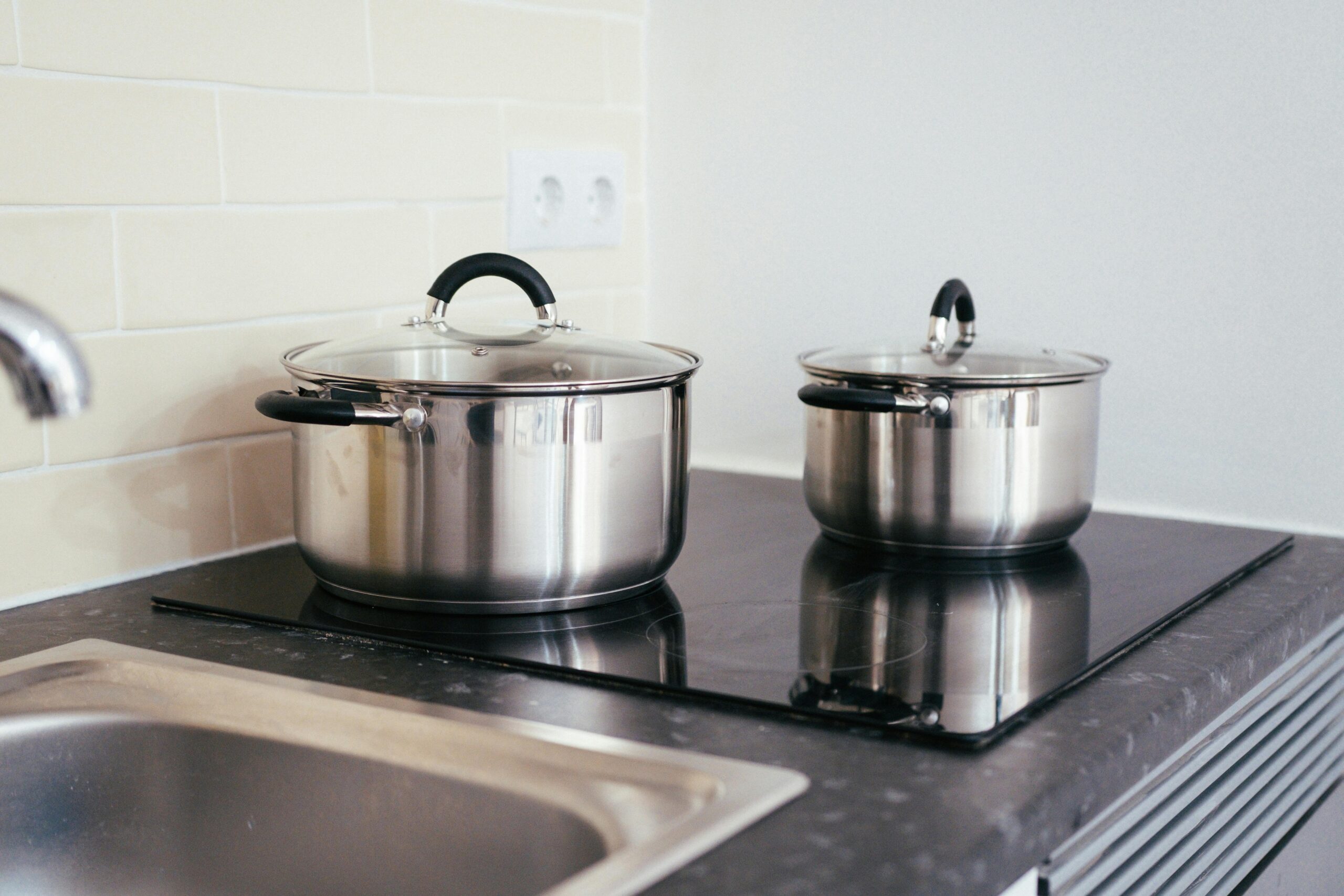
The tested stockpots ranged from less than $50 to more than $350. While some premium, fully clad models performed well, they did not consistently outperform more affordable options. In at least one case, an expensive tri-ply stockpot scorched the vegetables during browning more than cheaper competitors.
Because a stockpot’s main job is to maintain a gentle simmer over long periods—rather than searing at extreme temperatures—ultra-sophisticated cladding is less critical than it is in, say, a stainless steel skillet. Reasonably thick construction and a decent base are enough for most home uses.
The top stockpot picks
Cuisinart 12-quart MultiClad Pro stainless stockpot (best overall)
This three-ply stainless steel Cuisinart model stood out as the best all-around stockpot in the test.
What stood out
- Its relatively wide, somewhat shorter body makes stirring and browning easier than in taller, narrower designs.
- A gently tapered rim helps control the flow when pouring, minimizing splashes.
- Sturdy, riveted side handles provide a secure, balanced grip, even when the pot is full.
- It produced evenly cooked mirepoix with good caramelization and no scorching.
Potential drawbacks
- The pot is on the heavy side for a 12-quart model, which some cooks may notice when it’s full.
- Textured ridges on the undersides of the handles can be a little less comfortable when lifting with bare hands.
- The wider body makes it a bit bulkier to maneuver at the sink during washing.
For anyone who regularly makes big pots of stock, soup, or sauce, this 12-quart Cuisinart offers a strong balance of capacity, performance, and usability.
Vigor 12-quart aluminum-clad stainless stockpot (best budget 12-quart)
For home cooks who need a large pot only occasionally or want to spend less, the 12-quart Vigor model from restaurant-supply channels is an impressive value.
What stood out
- Extra-wide handles are easy to grab with both bare hands and mitts, offering excellent leverage and control.
- It’s more than a pound lighter than the Cuisinart, so it feels easier to carry when full.
- An aluminum-clad base distributes heat well enough to cook mirepoix evenly without burning.
- At under $50 at the time of testing, it delivers solid performance for a fraction of the cost of many premium brands.
Potential drawbacks
- Because only the base is aluminum-clad (rather than the full sidewalls), it developed less fond and deep browning than some fully clad competitors.
- The rounded handles are a bit thinner, which can feel slightly less stable when carrying a completely full pot.
For occasional big-batch cooking or as a starter stockpot, the Vigor offers practicality and safety at a low price.
Misen 8-quart stainless steel stockpot (best smaller stockpot)
If you cook for a smaller household or have limited storage space, an eight-quart stockpot can be more realistic than a bulkier 12-quart. Among the smaller models tested, Misen’s 8-quart stockpot was the clear winner.
What stood out
- Its squat, compact shape fits comfortably on most stove burners and in tighter cabinets.
- Flat, broad handles allow a comfortable, steady grip.
- Thanks to its smaller volume, it brought water to a full boil in around 30 minutes—noticeably faster than the 12-quart models.
- A thick, five-ply construction gave very even heat distribution and especially good browning on the mirepoix.
Potential drawbacks
- It feels relatively heavy for its size, which some users might find surprising.
- The handles became hot during cooking, so towels or mitts are required whenever you move or tilt the pot.
For cooks who rarely need more than eight quarts and want a pot that can double as an everyday large saucepan or Dutch oven stand-in, the Misen 8-quart is a strong option.
Other stockpots and notable misses
A few other stockpots were tested and fell into either the “also good” or “not recommended” categories.
Also good
- All-Clad 12-quart tri-ply stockpot: This pot is relatively light and known for its durable build. However, its narrow handles made it harder to grip safely with towels or oven mitts, and it scorched vegetables more than several other models in the browning test. The 12-quart version appears to be discontinued.
- Tramontina 16-quart stainless stockpot: This supersized option handled browning well, creating caramelized vegetables without sticking. Its main downside was awkward handling: narrow, upward-angled handles made carrying and pouring more difficult. Still, for those who truly need a 16-quart capacity, it’s a viable choice.
Not recommended
- Cook N Home 12-quart steel stockpot: Very light and fitted with silicone-coated handles that feel comfortable at first, this pot’s tall, narrow build made stirring cumbersome. It also overheated quickly and smoked throughout much of the browning test.
- Goldilocks 8-quart stockpot: Marketed as induction-ready, this pot did not register properly on two different induction cooktops, which led to it being excluded from the boiling and browning tests.
- Great Jones Big Deal: Visually striking but functionally frustrating, this pot’s large rounded handles overheated and felt awkward in use, and it badly scorched during the browning test.
How to choose the right stockpot size
The best size depends on how and how often you cook:
- 12 quarts: A versatile choice for most home kitchens. It’s large enough for big batches of stock, soup, or sauce, but not so huge that it’s impossible to store or move.
- 16 quarts: Useful if you regularly make huge volumes—such as weekly batches of bone broth, preserving projects, or cooking for large groups. The trade-off is extra bulk and weight.
- 8 quarts: Ideal for smaller households, apartment kitchens, or those who rarely cook in very large quantities. This size is often flexible enough to stand in for a Dutch oven and works well as an everyday large pot.
Stockpot vs. Dutch oven: what’s different?
Although they sometimes overlap in use, stockpots and Dutch ovens are designed differently:
- Capacity: Stockpots typically range from eight to 16 quarts. Dutch ovens usually hold around six to eight quarts.
- Shape: Stockpots are tall with straight sides and a relatively narrow footprint. Dutch ovens tend to be shorter and wider, sometimes even oval.
- Material: Most Dutch ovens are cast iron coated with enamel, which heats more slowly but holds heat for a long time. Stainless steel stockpots heat up and cool down more quickly, which can be convenient for boiling and fast adjustments.
For long, gentle simmering of large volumes of liquid, the stockpot’s shape and capacity make it the better tool. For braises and oven cooking, the Dutch oven usually wins.
Basic care and cleaning tips
Keeping a stainless steel stockpot in good shape is straightforward:
- For everyday cleaning, use warm water, dish soap, and a soft sponge.
- If the bottom is badly browned or lightly scorched, simmer a 50:50 mix of water and vinegar in the pot, then pour it out and repeat if needed.
- For persistent stains or discoloration, a gentle cleanser formulated for stainless steel (such as a scouring powder designed for cookware) can help.
- Dry the pot with a soft towel instead of air-drying to prevent water spots from forming.
With these basics, your stockpot should stay reliable and attractive for many years of broths, boils, and Sunday sauces.



0 comments