
The best mortar and pestle sets for spices, pesto, and pastes

A good mortar and pestle can completely change the way you cook. Hand-grinding spices, crushing garlic, or pounding herbs for pesto releases deep aromas and textures that electric gadgets often miss. But not every set is powerful, comfortable, or practical enough for everyday kitchen use.
Drawing on structured testing with wet and dry ingredients, this guide highlights the top-performing mortar and pestle sets and explains what actually matters when you’re choosing one for your kitchen—whether you want to mix curry pastes, whip up guacamole, or simply grind fresh pepper.
How the mortar and pestle sets were tested
To compare different designs and materials fairly, each mortar and pestle set went through a series of repeatable kitchen tests that covered both dry and wet preparations.
Whole peppercorn test
Each mortar was loaded with two tablespoons of whole black peppercorns. Testers then ground by hand until the spice reached a medium-coarse texture, timing how long each set took and noting how comfortable and stable it felt in use.
Dukkah spice blend test
To evaluate performance with a mixed spice and nut blend, a batch of dukkah was prepared and portioned into each mortar. Testers observed how easily the pestle broke down the mixture into an even, coarse powder and whether ingredients tended to jump out of the bowl.
Pesto test
For wet ingredients, each set was used to make pesto. Testers looked for a sauce that was creamy and emulsified rather than stringy or oily, paying close attention to how well the mortar contained the basil and oil and whether the pestle could efficiently crush nuts and cheese.
Sesame seed test for suribachi sets
Japanese-style suribachi mortars, which have ribbed ceramic interiors and wooden pestles, were assessed separately. Testers ground sesame seeds into a paste, timing how quickly each set created a smooth, cohesive mixture.
Usability and cleanup
Between tests, each mortar and pestle was cleaned according to the manufacturer’s instructions. Stability, comfort in the hand, ease of pouring out ingredients, and how quickly any food residue could be removed were all taken into account.
Key lessons: what really matters in a mortar and pestle
Weight and non-slip bases prevent frustrating movement
Light mortars that slide across the counter make grinding hard work. Sets with either a very heavy base or a non-slip ring stayed put and were much easier to use. The basalt molcajete from Masienda, for example, weighs about 20 pounds and remained rock-steady even during vigorous pesto making. Suribachi bowls with silicone rings, such as the one from Motoshige, were also reliably stable.
Textured interiors outperform smooth bowls
Smooth marble or highly polished stone interiors struggled to grab and break down spices. In testing, marble models and a polished granite molcajete routinely underperformed: whole spices skated along the surface instead of being crushed. Bowls made from unpolished granite or basalt, or ribbed ceramic, created the friction needed to pulverize peppercorns, nuts, and seeds efficiently. Textured granite mortars from ChefSofi and Cilio, as well as the basalt Masienda molcajete and the ridged Motoshige suribachi, all excelled here.
Bigger bowls are easier to work with—even for small jobs
Compact mortars may look convenient, but shallow or narrow bowls caused more problems than they solved. In a small marble mortar just a couple of inches deep, peppercorns and coriander frequently bounced out while grinding. Deeper, wider bowls—around five inches wide and four inches deep or more—contained ingredients better and gave the pestle enough room to move. Large-capacity options from ChefSofi, Cilio, and Masienda made everything from a small spice rub to a party-sized batch of salsa simpler and cleaner.
Pestle design matters more than length
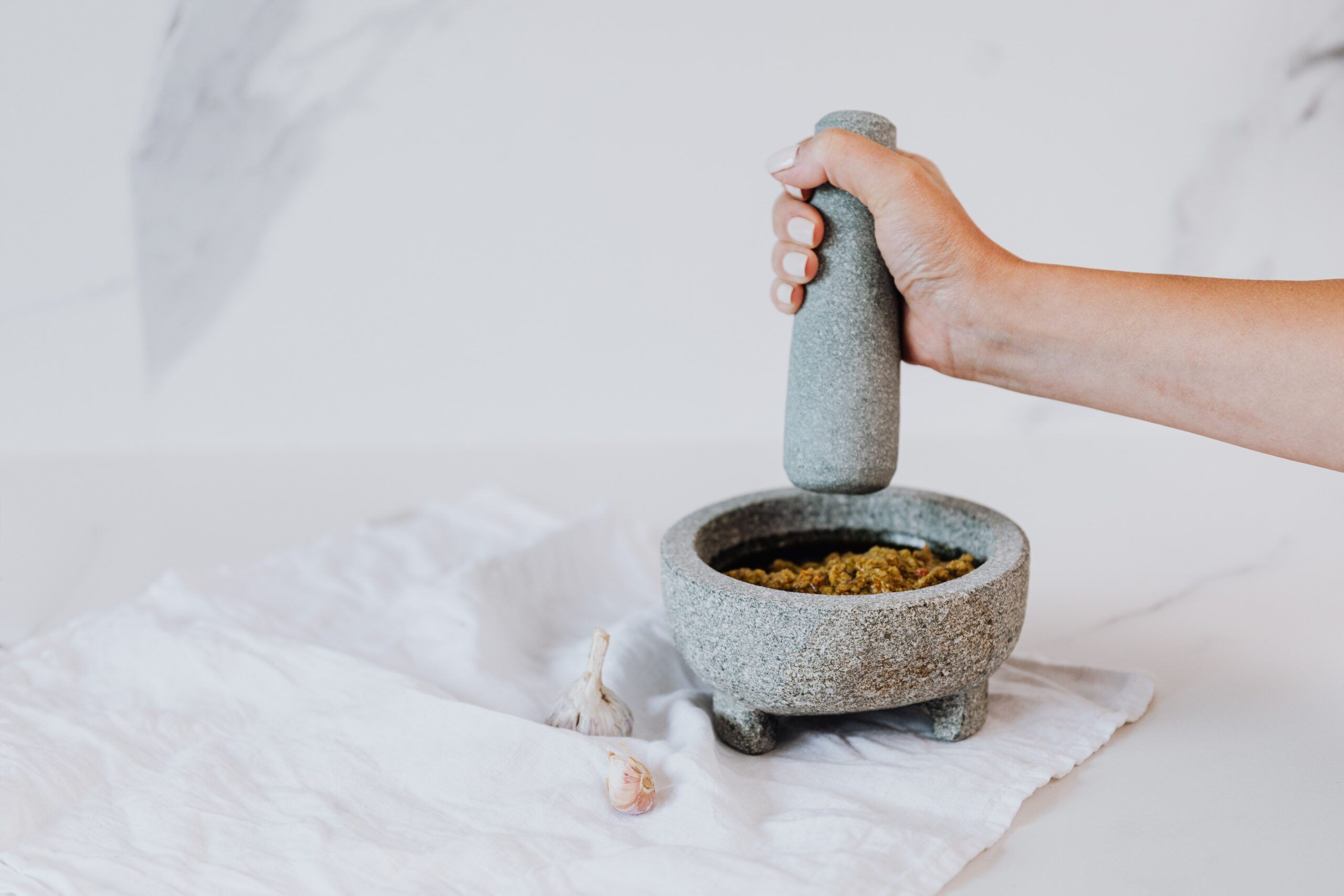
A long pestle is not automatically better. Testers found both short and long pestles that worked well, as long as the grinding end had some texture and the handle felt secure. Smooth marble pestles tended to slide over ingredients, especially slippery seeds, while grooved or slightly rough wooden and stone pestles gripped and crushed more effectively. A standout example was the textured wooden pestle in the Motoshige suribachi set, which turned sesame seeds into paste in under a minute.
Buying guide: what to look for in a mortar and pestle
Based on the testing, the most reliable sets shared a few key characteristics:
- Stable base: Either a heavy bowl or a non-slip ring so the mortar does not travel across the counter.
- Generous capacity: An interior at least five inches wide and roughly four inches deep so ingredients stay contained.
- Textured, unpolished material: Granite, basalt, or ribbed ceramic create the friction needed for both dry spice grinding and wet pastes.
- Comfortable, slightly rough pestle: A grippy handle and a textured grinding end, rather than a completely smooth marble cylinder.
The best mortar and pestle sets
Best overall: ChefSofi extra large granite mortar and pestle
This granite set has remained a top pick through multiple testing rounds, largely due to its balance of capacity, texture, and comfort.
The bowl is over 7 inches across and holds close to five cups, which means ingredients stay inside the mortar instead of scattering. Its rough, unpolished interior created enough abrasion to crush peppercorns to the desired consistency in under six minutes, and it handled pesto smoothly, turning basil, nuts, and cheese into a cohesive sauce.
The set includes two pestles of different lengths, both with subtly grooved ends that help grip ingredients. At almost 13 pounds, the mortar is heavy enough that it did not budge during use. Cleaning was straightforward: a quick rinse and wipe were all that was needed in testing.
The trade-off for the generous bowl is size. This is a large, weighty piece of equipment, so it will demand permanent counter space or a sturdy lower shelf.
Another excellent granite set: Cilio by Frieling Goliath
Cilio’s granite mortar and pestle offers deep sides and a comfortable external shape that’s easier to hold and tilt when emptying. The interior is subtly textured rather than aggressively rough, which made it pleasant to use over extended grinding sessions.
At around 11 pounds, the mortar stayed steady throughout testing. It was the fastest performer in the peppercorn trial, reducing the spice to a coarse grind in just under three minutes. Cleanup was quick because there were no awkward crevices where food could lodge.
The main downside is the pestle size. Some testers with larger hands felt that the relatively short pestle made it easier for knuckles to bump into the bowl while working.
Best molcajete for big batches: Masienda molcajete
This traditional-style basalt molcajete is built for volume. With an interior roughly 9.5 inches across and a depth of just over five inches, it can comfortably hold up to four cups—ideal for large servings of guacamole, salsa, or rustic sauces.
During the pesto test, this molcajete kept all ingredients contained, with no splashing oil or flying basil. The rough basalt interior gave excellent grip on nuts and cheese, and the finished pesto was among the smoothest and most evenly emulsified of all the models tested.
Its 20-pound weight means it simply does not move once set down, which is a major advantage for enthusiastic grinding. However, that same heft and the rough interior demand some care: you need to be mindful of your hand position to avoid scraping your knuckles, and food can cling in the pores and crevices, requiring slightly more attentive cleaning.
Best suribachi for seeds and light pastes: Motoshige mortar bowl and surikogi
For cooks who often grind seeds or prepare delicate pastes, a Japanese-style suribachi is a smart addition to the kitchen. The Motoshige set pairs a ribbed ceramic bowl with a wooden pestle made from the sansho pepper tree.
The interior of the bowl features fine, diamond-shaped ridges that grip sesame seeds without shredding them. Combined with the subtly abrasive wooden pestle, this design produced sesame paste in about a minute—the fastest of any set in that specific test. Despite the pronounced texture, residue rinsed away easily with just water.
This set is noticeably lighter than the granite and basalt options, which makes it pleasant to handle but also a bit more delicate. The ceramic bowl and wooden pestle can chip or wear more easily if mishandled, so they reward careful storage and hand-washing.
Sets that did not make the cut
Several mortar and pestle sets fell short for one or more reasons:
- Chef’n marble mortar and pestle: The shallow bowl (about two inches deep) allowed spices to leap out during grinding, and it struggled to produce fine, even results.
- Helen’s Asian Kitchen suribachi: While visually appealing, the shallow bowl made it difficult to turn sesame into a truly smooth paste, and the lack of a non-slip base meant it slid around on the counter.
- IMUSA granite molcajete: A relatively smooth interior surface prevented efficient grinding. It was the only set that could not successfully grind sesame seeds during testing.
- KROK Thai granite mortar and pestle: The cork ring intended to protect countertops slipped repeatedly, undermining stability. Its interior texture also was not as effective as that of the top performers.
- Nuova Marmotecnica marble mortar with beechwood pestle: Attractive but impractical, with a smooth marble interior that let spices skate and bounce. In the dukkah test, peppercorns and coriander frequently escaped the bowl.
How to season a new mortar and pestle
Most stone mortars benefit from seasoning before their first serious use. This helps remove stone dust and loose particles and reduces the risk of off-flavors.
Always start by checking the manufacturer’s instructions. If no guidance is provided, a simple process works for many granite or basalt mortars:
- Rinse the mortar and pestle to remove visible dust and let them air-dry.
- Add a small handful of uncooked white rice and grind until it becomes a fine powder. Discard the powder and repeat until the rice no longer turns gray or picks up visible stone residue.
- Grind a mixture of garlic, salt, and spices into a paste to help draw out remaining particles and odors. Discard the paste.
- Rinse with water, avoiding soap if possible, and let both pieces dry completely.
How to clean and care for a mortar and pestle
For most stone and ceramic mortars, gentle cleaning keeps them in good condition:
- Avoid strong detergents when you can: Harsh soaps can strip away the seasoning layer and lead to lingering soapy flavors.
- Rinse promptly after use: Use warm water and your hand or a soft brush to remove residue.
- Use soap only for stubborn smells: If you grind something particularly pungent, you can wash with a mild detergent, then plan to re-season your mortar afterward.
- Always air-dry fully: Let both the mortar and pestle dry completely before storing to prevent moisture buildup and odors.
Choosing the right mortar and pestle for your cooking
For creamy pesto, tests showed that textured granite, basalt, and ceramic mortars significantly outperformed smooth marble. Marble models tended to tear basil leaves and leave the sauce chunky instead of velvety. If pesto is a priority, consider a substantial granite or basalt bowl like those from Cilio, ChefSofi, or Masienda.
For guacamole and chunky salsas, capacity and width matter most. A wide, deep molcajete—such as the Masienda—makes it easy to mash avocados and crush aromatics while keeping everything contained, even when preparing several cups at a time.
If your cooking leans toward toasted seeds, spice blends, and delicate pastes, a suribachi like the Motoshige provides precision and speed with less weight than stone, though it calls for slightly more careful handling.
Whichever style you choose, prioritizing a stable base, textured interior, and comfortable pestle will give you a tool that earns a permanent place on your kitchen counter.



0 comments